Harmony with Nature

Introduction: The Intertwined Fate of Humanity and Nature
From the air we breathe to the food we eat, from the rivers that nourish our fields to the forests that regulate our climate, nature is not a distant backdrop to human life—it is the very foundation of our existence. For millennia, indigenous cultures have revered nature as a living entity, a teacher, and a partner. Yet in the past two centuries, the Industrial Revolution and the pursuit of unchecked economic growth have severed this ancient bond. Today, as climate change accelerates, biodiversity collapses, and ecosystems unravel, humanity faces a defining question: Can we redefine our relationship with nature—from domination to coexistence? The answer lies not in sacrificing progress, but in rewriting its terms to prioritize harmony over exploitation.
1. The Broken Bond: How Human Actions Are Fracturing Nature
Climate Change: The Fever of the Planet
The Earth’s climate system, finely tuned over 4.5 billion years, is now overheating due to human activities. The burning of fossil fuels (coal, oil, and gas) has pumped over 2.4 trillion tons of CO₂ into the atmosphere since the Industrial Revolution, trapping heat and disrupting global weather patterns. The consequences are dire:
- Rising temperaturesare melting glaciers (Greenland loses 279 billion tons of ice annually), raising sea levels that threaten 600 million people in coastal communities.
- Extreme weather events—hurricanes, wildfires, and floods—are becoming more frequent and intense. In 2023, global temperatures hit a record high, with Canada’s wildfires releasing more CO₂than the country’s annual fossil fuel emissions.
- Ocean acidification, caused by absorbing excess CO₂, is dissolving coral reefs (home to 25% of marine life), which are projected to disappear by 90% if warming exceeds 1.5°C.
Biodiversity Loss: The Silent Extinction
While climate change dominates headlines, the ongoing loss of biodiversity is equally catastrophic. Humans have altered 77% of Earth’s land surface and 87% of marine areas, destroying habitats at an unprecedented rate:
- Species extinctionis occurring 1,000 times faster than natural background rates. The Amur leopard, Sumatran orangutan, and vaquita porpoise are among the 41,000 species on the IUCN Red List of Threatened Species.
- Deforestationfor agriculture (especially palm oil, soy, and cattle ranching) is wiping out rainforests—the lungs of the planet—at 10 million hectares per year (equivalent to 27 soccer fields per minute). The Amazon, once a carbon sink, is now emitting more CO₂ than it absorbs due to tree loss.
- Pollutionis choking ecosystems. Microplastics have infiltrated even the deepest ocean trenches and Arctic snow, while pesticides have wiped out 40% of insect populations (critical pollinators for crops).
Resource Depletion: Feeding the Insatiable Machine
Humanity’s demand for natural resources has exceeded the planet’s regenerative capacity since the 1970s. Today, we use the equivalent of 1.7 Earths’ worth of resources annually—a number projected to rise to 2.5 Earths by 2050 if trends continue.
- Water scarcityaffects 3 billion people (nearly 30% of the global population), with rivers like the Colorado (USA) and the Ganges (India) running dry in critical seasons.
- Soil degradation—caused by over-farming, deforestation, and chemical fertilizers—has ruined 33% of the world’s arable land, threatening global food security.
These crises are not isolated; they are interconnected. Deforestation accelerates climate change, which in turn drives species extinction and water shortages. The broken bond between humans and nature is a self-destructive cycle.

2. Why Nature Matters: The Invisible Threads That Bind Us
Nature is not just a collection of resources to be extracted; it is a complex web of life that sustains human civilization in ways we often overlook.
Ecosystem Services: The Free Gifts We Take for Granted
Natural ecosystems provide services worth $125–145 trillion annually—more than the global GDP. These include:
- Clean air: Forests absorb 2 billion tons of CO₂yearly and filter pollutants, while phytoplankton in oceans produce 50–80% of Earth’s oxygen.
- Clean water: Wetlands filter contaminants, and watersheds supply drinking water to 1.5 billion people. The Himalayan glaciers, for example, feed rivers that sustain 2 billion Asians.
- Food security: Pollinators (bees, butterflies, bats) enable 75% of global food crops, including fruits, vegetables, and coffee. Without them, our diets would be bland and nutrient-poor.
- Climate regulation: Mangroves store 4 times more carbon per hectare than tropical forestsand protect coastlines from storms. Peatlands, though covering just 3% of Earth’s surface, hold 30% of its soil carbon.
Cultural and Spiritual Significance
For indigenous peoples—who manage 80% of global biodiversity—nature is sacred. The Maasai in Kenya revere the Serengeti as a living ancestor, while Native American tribes view rivers as kin. These cultures teach us that destroying nature is not just an environmental issue, but a moral and spiritual one.
Human Health and Well-being
Spending time in nature reduces stress, lowers blood pressure, and boosts immunity. Studies show that children who grow up near green spaces have 20% fewer respiratory illnesses and higher academic performance. Conversely, environmental degradation correlates with rising rates of asthma, cancers, and mental health disorders.
3. Pathways to Harmony: Rethinking Our Relationship with Nature
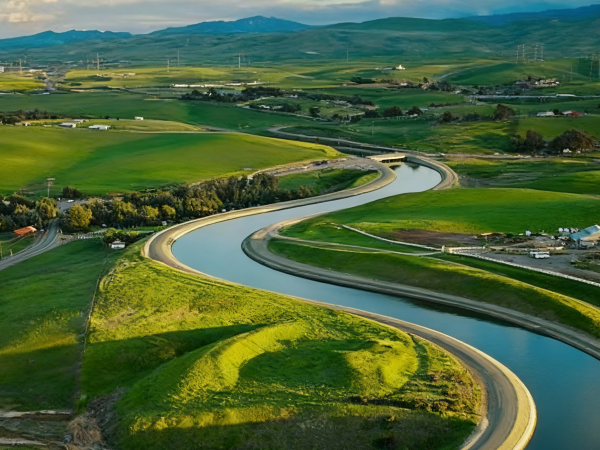
The solution is not to reject development, but to redesign it around ecological limits and respect for nature’s rights.
1. Rewilding and Conservation: Healing the Land
- Protecting critical habitats: Expanding protected areas (currently covering 17% of land and 10% of oceans) to safeguard biodiversity hotspots. Costa Rica, for instance, reversed deforestation by paying landowners to conserve forests, increasing tree cover from 21% in 1983 to 52% today.
- Rewilding degraded ecosystems: Reintroducing native species (like wolves in Yellowstone, which restored riverbanks by controlling elk populations) and restoring wetlands/mangroves to revive biodiversity.
2. Sustainable Living: Reducing Our Footprint
- Circular economies: Designing waste out of systems by reusing materials (e.g., Sweden recycles 99% of its household waste, with 50% reused).
- Plant-based diets: Reducing meat consumption (livestock farming accounts for 5% of global GHG emissions) and supporting regenerative agriculture that heals soil.
- Green energy: Transitioning to renewables (solar, wind, hydro) to replace fossil fuels. Costa Rica generates 98% of its electricity from renewables, proving it’s possible.
3. Indigenous Leadership and Rights
Indigenous communities protect 80% of biodiversity while using only 5% of the Earth’s land. Recognizing their land rights (as seen in Bolivia’s 2010 Law of Mother Earth, which grants nature legal personhood) is key to conservation.
4. Global Cooperation and Policy
- The Paris Agreement(2015) aims to limit warming to 5°C, but countries must honor their pledges to cut emissions.
- The UN’s Kunming-Montreal Global Biodiversity Framework(2022) targets protecting 30% of land and oceans by 2030 (“30x30”).
- Nature-based solutions (NbS): Using ecosystems (e.g., mangroves for flood protection, forests for carbon capture) to address climate change, costing less than 10% of gray infrastructure(dams, seawalls).
Conclusion: A Call to Coexist
The story of humanity and nature is not a tale of conquest, but one of interdependence. As the late biologist E.O. Wilson wrote, “The real problem of humanity is the following: We have Paleolithic emotions; medieval institutions; and god-like technology. And it is terrifically dangerous, and it is now approaching a point of crisis.”
But crisis is also an opportunity. By reimagining our role—from nature’s conquerors to its stewards—we can build a future where:
- Cities are designed with green roofs and urban forests.
- Farms work with nature, not against it.
- Children grow up knowing the names of trees, birds, and rivers.
- Economies measure success not just by GDP, but by the health of ecosystems and communities.
The path to harmony requires courage, creativity, and collective action. But the reward is a world where both humanity and nature can thrive—a world where the air is clean, the rivers run clear, and every species, including ours, has a place to call home.
“In every walk with nature, one receives far more than he seeks.” — John Muir
Let us walk gently, and together, restore the balance.
Meet the experts in Research in Ecology

Shunyao Zhuang
Personal Homepage
Scopus
Affiliation: Institute of Soil Science, Chinese Academy of Sciences, Beijing, China
Research interests: Foil science; Forest soil

T M Indra Mahlia
Personal Homepage
Scopus
Google Scholar
Affiliation: School of Civil and Environmental Engineering, University of Technology Sydney (UTS), Sydney, Australia
Research interests: Energy and fuels; Water-energy nexus; Circular economy

Saurabh Gangola
Personal Homepage
Scopus
Affiliation: Department of Microbiology, Graphic Era Deemed to be University, Dehradun, India
Research interests: Biodegradation; Soil microbiology; Plant microbe Interaction; Bioremediation; Environmental microbiology; Pesticide

Rui Alexandre Pita Perdigão
Personal Homepage
Scopus
Affiliation: Meteoceanics Institute for Complex System Science, Washington, USA
Research interests: Complex system sciences; Earth system dynamics; Climate dynamics; Ecosystem dynamics; Coevolution; Natural hazards; Mathematical physics; Machine learning; Artificial intelligence; Information theory; Nonlinear dynamics; Chaos; Global change; Sustainability; Interdisciplinary methods for ecological analytics, Modelling and decision support.
Want to join us?