Can Marine Structures Survive Unusual Forces?
—Marine Structures under Special Loads
Marine structures are conventional in design but special in counteracting various environmental loads.
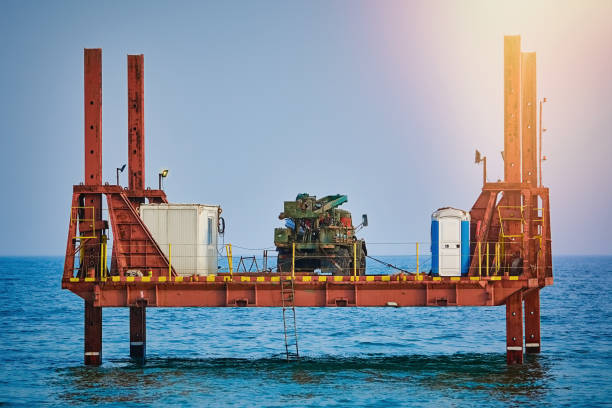
The significance and objectives of the Research Project
Marine structures are conventional in design but special in counteracting various environmental loads. Both the superstructure and substructure need special attention in terms of materials, design perspectives, and construction methods. Even retrofitting, and repair is crucial because of the fact that marine structures are most often subjected to repairs while they are in service. Further, it needs advanced tools to inspect and carry out repairs underwater. While the above issues are handled through intelligent interception by practicing marine engineers, the estimate of design loads including fire loads, impact loads, blast loads, ice loads, and additional loads that arise from bio-fouling need a critical revisit.
Design codes are also mostly silent about the estimate of such loads on marine structures, due to their stochastic nature and randomness. As a result, practicing engineers are not exposed to the recent advancements in estimating such loads and design procedures of marine structures.
This research project is dedicated to integrating the academic, industrial, and research professionals while helping each other in understanding these critical issues.
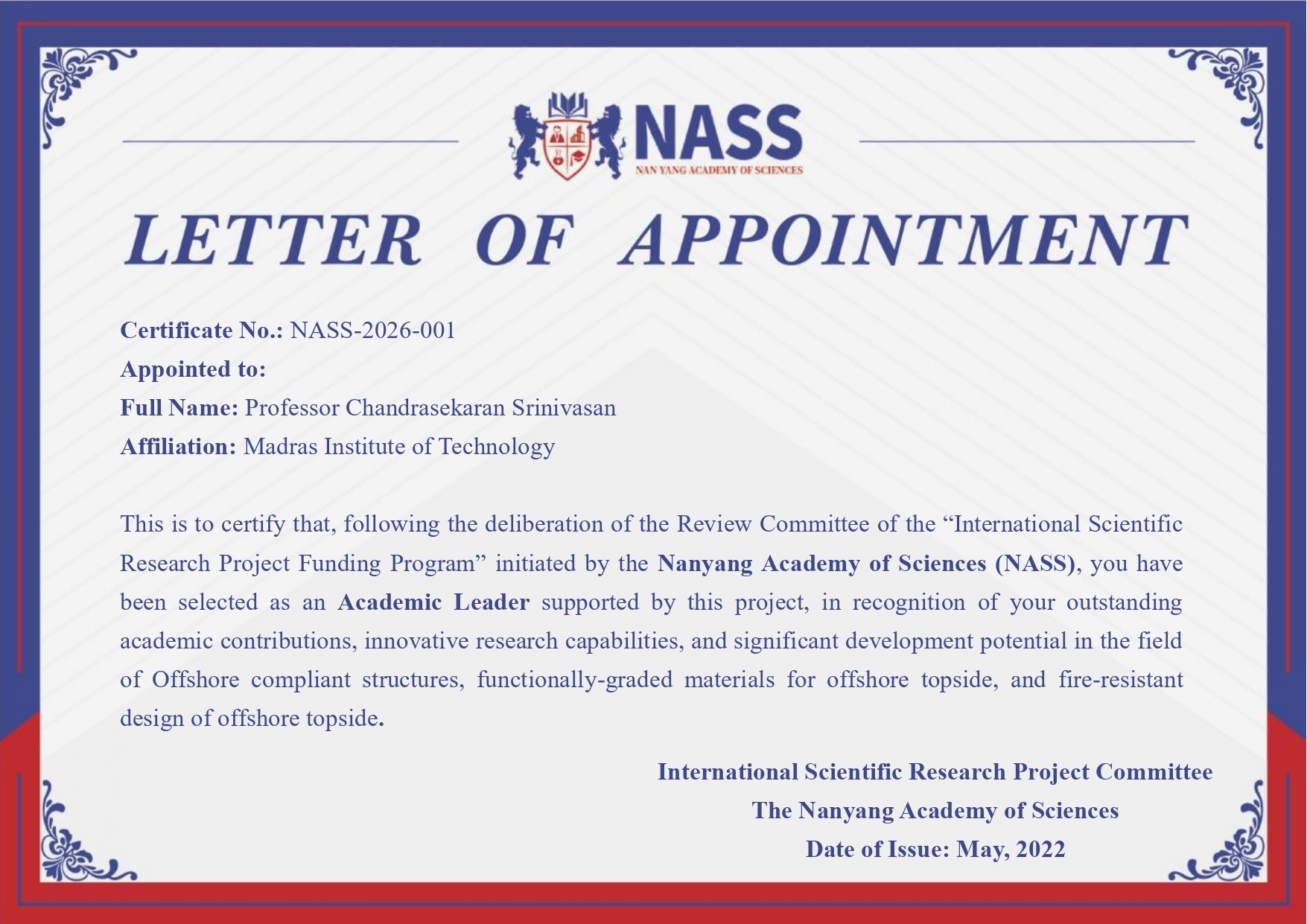
Academic Leads:

Prof. Chandrasekaran Srinivasan
Personal Homepage
ORCID: 0000-0001-8346-5724
Scopus
Affiliation: Madras Institute of Technology, India
Research Interests: Offshore compliant structures, Functionally-graded materials for offshore topside, Fire-resistant design of offshore topside
Co-academic Leads:

Prof. Arvind Kumar Jain
Personal Homepage
ORCID: 0000-0003-2529-2399
Affiliation: Indian Institute of Technology Delhi, India
Research Interests: nanotechnology, analytical chemistry, and sustainable materials.

Dr. Sreevalsa Kolathayar
Personal Website: https://sreevalsa.in/
Google Scholar: https://goo.gl/jbmkdo
Affiliation: Karnataka Institute of Technology, Surathkal - 575025, India
Research Interests: Disaster Risk Reduction, Seismic Hazard and Risk, Landslide: Early Warning and Mitigation, Soil Stabilization and Reinforcement, Earth Dams and Coastal Reservoirs
Academic Leader’s Statement:
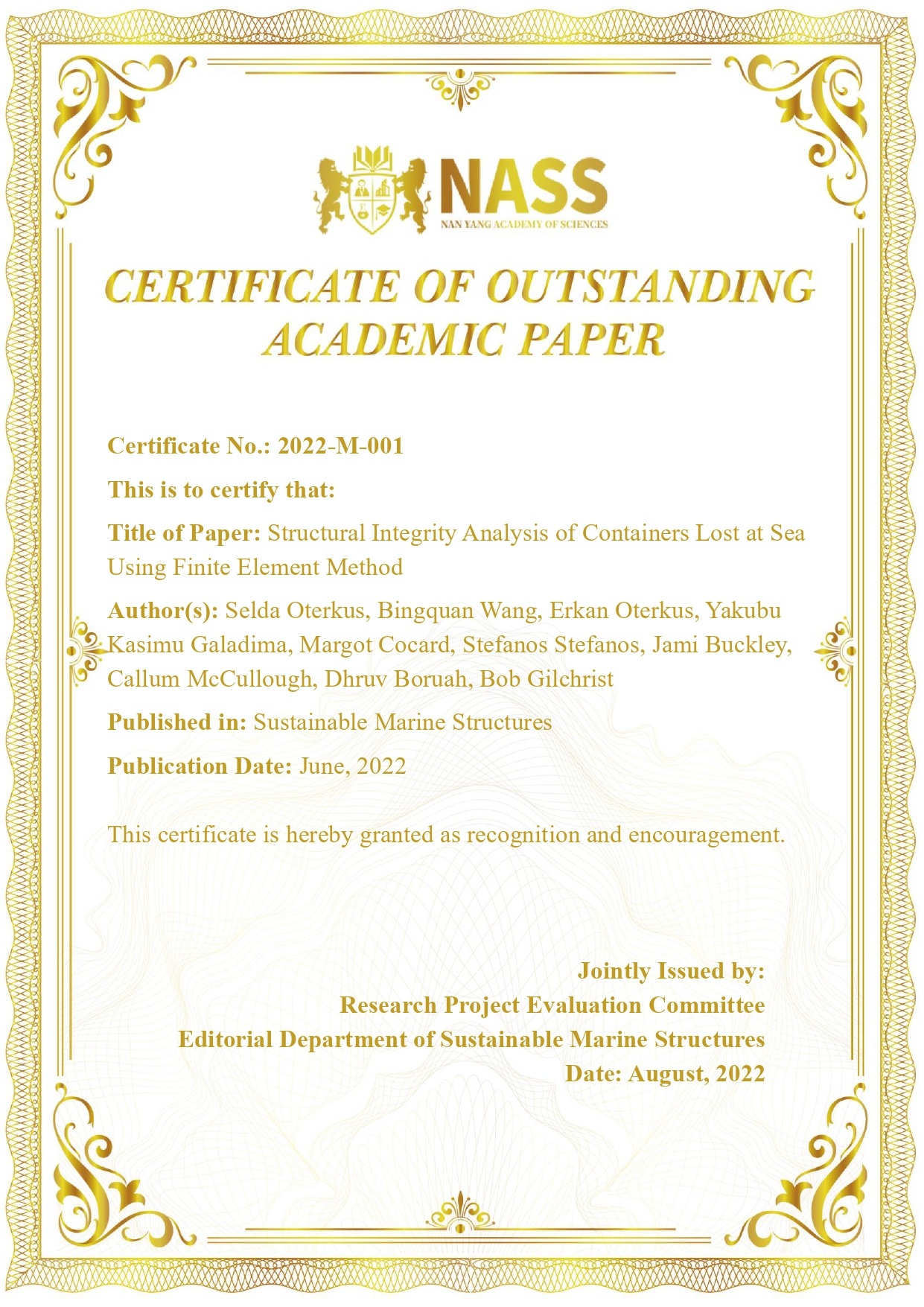
“Structural Integrity Analysis of Containers Lost at Sea Using Finite Element Method was recognized as an Outstanding Paper for its critical relevance to maritime safety by investigating structural failures of lost shipping containers under deep-sea pressure, innovatively applying Finite Element Method (FEM) via ANSYS APDL to develop predictive models, rigorously analyzing von Mises stress and yield strength to identify conventional container limitations, proposing practical strengthened designs for industry application, and demonstrating interdisciplinary impact across mechanical engineering, maritime logistics, and computational simulation.”
Published Papers:
Structural Integrity Analysis of Containers Lost at Sea Using Finite Element Method
Selda Oterkus, Bingquan Wang, Erkan Oterkus, Yakubu Kasimu Galadima, Margot Cocard, Stefanos Stefanos, Jami Buckley, Callum McCullough, Dhruv Boruah, Bob Gilchrist
Article ID: 505
Dynamic Analysis of Splash-zone Crossing Operation for a Subsea Template
Adham M. Amer, Lin Li, Xinying Zhu
Article ID: 596
Acknowledgement
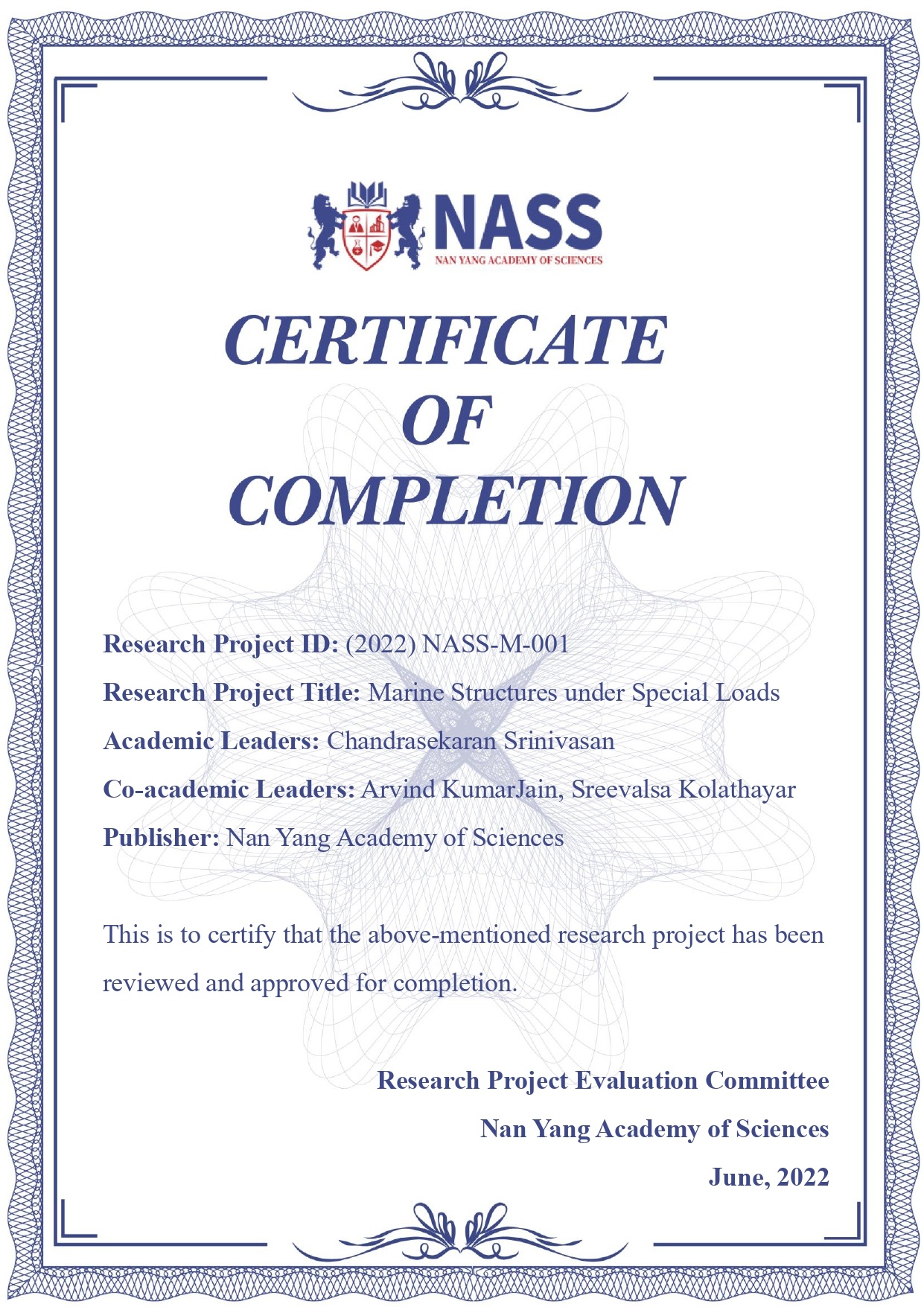
The Research Project of Marine Structures under Special Loads has been successfully concluded, marking a significant milestone in advancing the understanding and engineering solutions for marine structures facing extreme and unconventional environmental forces.
NASS extends its sincere gratitude to Prof. Chandrasekaran Srinivasan, Prof. Arvind Kumar Jain, and Dr. Sreevalsa Kolathayar for their pivotal roles in shaping this research project. Their expertise not only guided the thematic direction but also ensured the inclusion of cutting-edge research that will serve as a foundational reference for academics, engineers, and policymakers.
——NASS Research Project Evaluation Committee
The above article is published in the journal Sustainable Marine Structures.
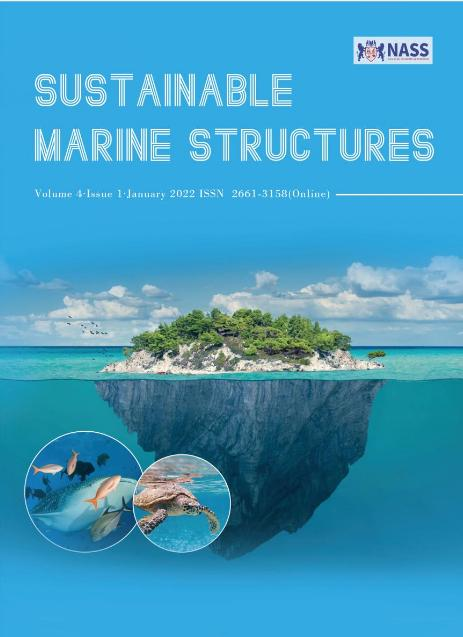
Sustainable Marine Structures