A Home for Everyone
1. Why Housing Matters: From Basic Survival to Societal Foundations
The original section outlined health, economic, and socio-psychological dimensions. The extended version delves deeper with concrete evidence:
Health: A Determinant of Life and Death
Disease and Mortality Risks: The World Health Organization (WHO) reports that homeless individuals face a 15–20 year lower life expectancy than the general population, with leading causes including extreme weather exposure (e.g., hypothermia in winter), violence (accounting for over 30% of deaths), and unmanaged chronic illnesses. In the U.S., over 50% of unhoused people suffer from hypertension or diabetes, yet fewer than 30% receive consistent medical care. Children in unstable housing experience 2–3 times higher school dropout rates due to stress and frequent moves.
Child Development: UNICEF highlights that children without stable homes show 20–30% lower cognitive development compared to peers, with long-term impacts on learning and emotional regulation. Prolonged housing insecurity can trigger “toxic stress,” altering brain development and increasing risks of mental health disorders in adulthood.
Economic: A Trap of Poverty and Stagnation
The Affordability Crisis: When housing costs exceed 30% of income (the global benchmark for “cost burden”), low-income families sacrifice essentials like food and healthcare. Harvard University research shows that each 10% rise in housing cost burden reduces household savings by 15–20%, trapping families in cycles of poverty. In London, renters in subsidized housing save only £200 (~$250) annually—insufficient for emergencies.
Labor Market Barriers: Unstable housing forces workers to commute long distances (e.g., sleeping in suburbs but working in city centers) or miss work due to health issues or evictions. In the U.S., the unemployment rate among unhoused individuals is ~30%, compared to the national average of 6%.
Social and Psychological: Dignity and Community Ties
Mental Health Toll: Studies reveal 60%+ of chronically homeless people experience depression or anxiety, often exacerbated by societal stigma. In Japan, “nojuku” (street sleepers) often reject shelters to avoid being labeled as “failures.”
Community Safety: High housing instability correlates with increased crime—not because residents are inherently criminal, but due to poverty-driven desperation. Brazil’s favelas (informal settlements) saw 40%+ drops in crime rates after government-led housing upgrades improved living conditions and social services.
2. The Global Housing Crisis: Data-Driven Realities
The original text highlighted slums, homelessness in wealthy nations, and climate displacement. The extension adds specifics and root causes:
Urban Slums: The Hidden Cost of Rapid Urbanization
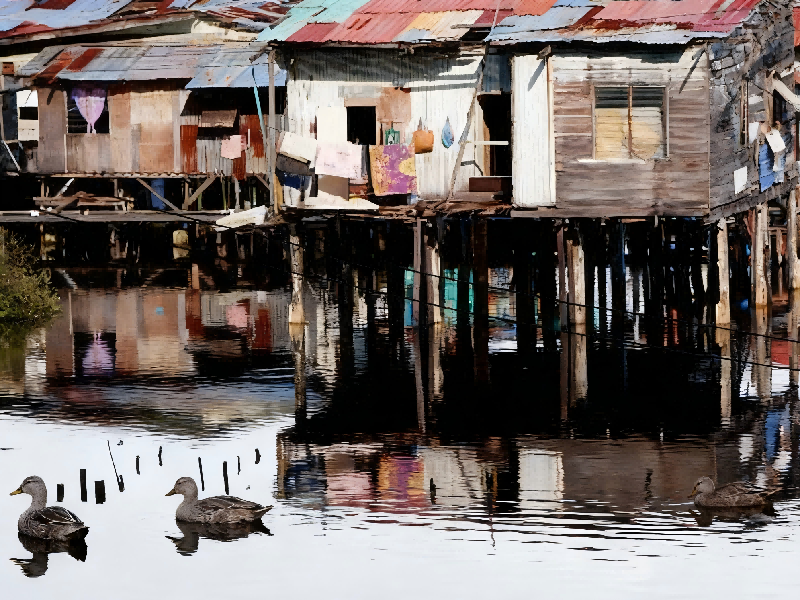
Scale and Conditions: UN-Habitat defines slums as areas lacking basic services (clean water, sanitation, durable housing). Globally, 1 billion people (25% of urban dwellers) live in such conditions, concentrated in South Asia (India, Bangladesh) and Sub-Saharan Africa. Mumbai’s Dharavi slum (2.1 km²) houses over 1 million people in <3 m²/persons paces (smaller than a parking spot), with shared toilets and open sewers.
Insecurity of Tenure: Slum dwellers often lack legal land rights; forced evictions are common. Nairobi’s Kibera slum (Kenya) has faced repeated demolitions, with residents protesting: “We don’t choose to live here—we can’t afford city housing.”
Homelessness in Wealthy Countries: Cracks in the Affluent Facade
The Paradox of Prosperity: Despite per capita GDPs exceeding 70,000 (U.S.), homelessness persists. The 2022 U.S. HUD report counted 582,000unhoused people, including∗∗301.5 million, while service workers (e.g., janitors, security guards) earn 40,000–60,000/year, forcing many to sleep in cars or garages.
Policy Gaps: European welfare states (e.g., UK, Netherlands) offer “social housing,” but strict eligibility (e.g., proving long-term homelessness) and decades-long waiting lists (Amsterdam: 5–8 years) limit access.
Climate Displacement: A Growing Threat
Disasters and Vulnerability: The World Bank estimates 23 million people are displaced annually by floods, hurricanes, and wildfires, with 80% from low-income countries (e.g., Bangladesh, Philippines). These populations often live in makeshift homes, making them disproportionately affected. For example, Bangladesh’s 2020 floods left 1 million homeless, mostly farmers pushed into overcrowded urban slums.
Future Risks: By 2050, climate change could displace 200–300 million people due to sea-level rise and droughts, creating “climate refugees” without legal status or housing solutions, potentially fueling conflicts.
3. Solutions: Policies, Innovation, and Community Action
The original section mentioned policies, innovative models, and community efforts. The extension provides concrete examples and challenges:
Policy Interventions: Lessons from Successes and Failures
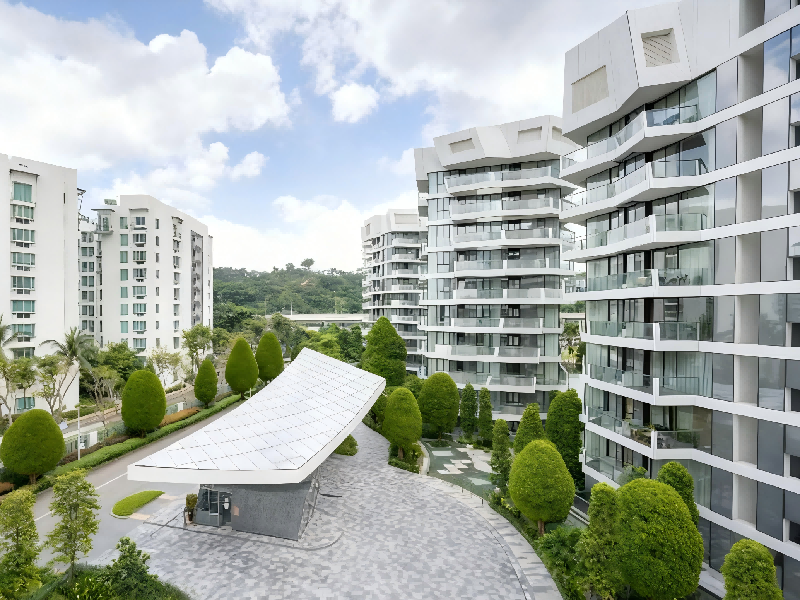
Singapore’s Public Housing Model: Through compulsory land acquisition (with above-market compensation) and large-scale construction, the government built 80%+ of national housing as public “HDB flats”, sold at 30–50% of market rates to eligible citizens (income-capped). Today, over 90% of Singaporeans own HDB flats, with integrated communities (schools, clinics, malls nearby)—a global benchmark.
Housing First in the U.S.: This approach prioritizes permanent housing before addressing addiction or mental health issues. Utah’s program for chronically homeless individuals reduced homelessness by 91% in 5 years and cut healthcare costs by 40%. However, its high per-person cost (~$20,000/year) limits scalability in budget-constrained regions.
Technological Innovations: Building Smarter and Faster
3D-Printed Homes: ICON (U.S.) developed a 3D printer that constructs 40–60 m² homes in 24–48 hours using durable concrete, costing 4,000–6,000/unit. The technology has built 50 homes in Mexico and is expanding to Texas for veteran housing.
Modular Construction: China’s Shenzhen “prefab social housing” project assembles standardized modules (e.g., bedrooms, kitchens) in factories, reducing construction time from 1 year to 3 months and allowing flexible unit combinations (e.g., single rooms for singles, two-bedroom units for families).
Community-Led Solutions: Grassroots Empowerment
Cooperative Housing: Denmark pioneered resident-owned cooperatives, where tenants jointly finance land purchases and collaborate with architects to design homes with shared spaces (e.g., kitchens, playgrounds). Over 50,000 Danish households live in such cooperatives, reporting 90% satisfaction due to affordability and community bonds. Similar models thrive in Germany and the Netherlands.
NGO-Led Initiatives: Brazil’s “National Housing Struggle Movement” (Movimento Nacional de Luta pela Moradia) organizes homeless groups to occupy vacant land (later legalized) or negotiate with developers. São Paulo’s “People’s Houses” project, built by residents themselves, provided 300 families with permanent homes at 1/5 the market cost.
Conclusion: Toward “Homes for All” That Are Truly Livable
Achieving universal housing requires more than just providing shelter—it demands affordable, dignified, and sustainable living environments. As urbanization accelerates (projected 68% global urban population by 2050) and climate change intensifies, the challenge will grow. Yet, as South African architect Diébédo Francis Kéré aptly stated: “Good housing design must answer people’s real needs—not luxury, but safety, warmth, and hope.” Through collaboration between governments, markets, and communities, the vision of “a home for everyone” can move from ideal to reality.